Tuesday, October 23, 2012

Smart Technologies: Useful Prototype or Flashy Powerpoint

One of the most recent technologies that we have touched upon in the technology course in Stockton is the SmartBoard hardware and software. This technology has become prevalent in a significant portion of classrooms across the country that have the technology budget that allows for it. The technology has replaced the projection technology that had previously replaced the transparency projectors that most students before the turn of the century had become accustomed to. While projection is just the basic function of this continually evolving technology, it is perhaps the most often used in the classroom on the SmartBoards and the technology similar to it (i.e. Promethean Boards). The pitch behind the hardware and software is the fact that the board can be used for more than just projection. The SmartBoards function similar to other technology with touch screen technology. The board allows the instructor and students to interact with what is onscreen, whether it be by marking up the screen with provided "pens," moving and interacting with objects simply by touching the screen, or by extended multimedia interaction. Below is a demo video for the technology for those who might be unfamiliar with it:

I'm not sure if "magical" is right, but it is fun...

However, despite the novelty of this technology, there seems to be a significant amount of shortcomings. Perhaps the most significant of all is the fact that the software, though similar to Microsoft PowerPoint, is absurdly complex and requires a significant amount of time to be dedicated just to learning how the technology works. The question then becomes: Who honestly has the time to learn to utilize something so complicated with so seemingly little payout? As I took time to learn the software, quite a long time, I came to see that not only is it strikingly similar to that of PowerPoint, but the features are sometimes more limited and frustrating than PowerPoint. While the physical interaction with the board is a great aspect for the kinesthetic learners in the classroom, the instructor has to ensure that the object that are not to be moved are firmly locked in place, with no exceptions. Forgot to lock something? It's definitely going to get touched, moved, and possibly edited. In addition to this, the technology seems to geared toward the younger classrooms instead of the older ones. The interaction, the animation, the colors, etc. seem to be something that is more focused on the early stages of learning rather than the later stages that require higher levels of thinking. Perhaps the last, and most important aspect, is that it is seemingly difficult to be certain of is whether or not the technology is actually facilitating learning and not just providing entertainment for the children in the absence of actual learning.


Learning or playing? Hmmm...

Perhaps when I have more interaction with the technology in an academic setting, there will be more answers than through simple speculation.

Sunday, October 14, 2012

QR Codes: Technology's Best Kept Secret

Not too long ago we were introduced to the concept of QR codes. Despite the fact that this technology has been around for many years in Japan, it has only seen a recent influx into Western culture. However, despite its influx, there are still people who are not only unfamiliar with how the QR codes work, some don't even know they exist. Sure, they see them when they enter a tourist trap or maybe in the supermarket, but they don't think anything of it. They go about their day and don't think about it again. This is, for the most part, how I was living in our society. The only twist is that I knew QR codes existed. I was unaware that they had not only landed in Western culture, but that they had exploded in popularity with the prevalence of the SmartPhone industry. Once I was introduced to the fact that we are utilizing the QR code to an extreme, I began to notice it more and more. Now, I can't go a day without seeing at least one QR code, if not a dozen. These tiny, pixelated boxes are on every object from food containers to energy bills. I recently got my electric bill and, wouldn't you know it, there's a QR code on it. Now being technologically behind, I had to take this QR code into a virtual reader after scanning it, but it produced the company name and my bill! Amazing, really. One could say that this is becoming a faster and more efficient way of communicating than texting proved to be.
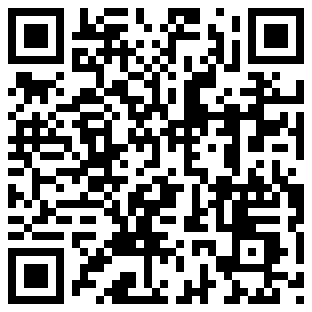
Here's an example for those unfamiliar. It'll take you to my website...

After the novelty of the concept wears off and one is able to think rationally again, the QR code seems to offer a fairly extreme set of bonuses and drawbacks. For now, we'll take a look at the bonuses. For one, these codes are easy to generate and usually free. You can simply search "QR code generator" in Google and a plethora of options are displayed. Not only can one make these QR codes in a matter of moments, but some sites allow you to customize the QR code with color or a graphic in the center. This makes the creation process fun and enticing for those who have an affinity for customization, the arts, or even a teenager seeking individuality. The wonderful part about these codes is that there is not knowledge gradient to use one. All one needs is a QR reader in their phone, iPad, or other tablet device and they can instantly access the information stored within these codes. They are also incredibly fun to scan as one never really knows what they are going to get when they scan them. Unless, of course, they are labeled. Hypothetically, these codes have the potential to transmit data without the worries that are plaguing the internet at the moment. There is no issue with copyright and there is no "file-sharing" to be worried about. A few months back www.reddit.com had a picture that showed a use of QR codes that makes an lexiphile like me squeal (see below). However, with every novel concept comes a drawback.

Using technology to promote reading the classics? Yes, please...


Despite the fun, the novel concept, and the ease of use, there are some drawbacks to this concept. For starters, the concept requires technology that is still very expensive for the average consumer. The Japanese have integrated software into even the most basic phones to read QR codes, while we are restricting the use of QR codes to SmartPhones. This is seeming foolish as, hypothetically, any phone with a camera could easily utilize the Augmented Reality software to read the codes. Instead, our phone companies want us to pay another $30 a month for a SmartPhone data plan and the hundreds of dollars that the phone will cost. Similarly, tablet technology has recently adapted, but raises the same issue: with what money? Since most of this technology starts with the huge price tag of $400 for the base models, average consumers are just not going to be able to utilize this. Perhaps the biggest drawback of this technology is its inability to be effectively used in the classroom. A project the requires the students to utilize their cell phones, though ideal for motivational purposes, would alienate students who might not be able to afford the required technology, and wouldn't be allowed in most cases by the administration. In the school that I'm observing this semester, cell phone use carries as much punishment as a violation of the strict dress code. So, with schools locking down the use of personal electronics, how is one to effectively utilize such a technology without coming under scrutiny of the administration?

Sometimes it seems that these are considered weapons in school...

All in all, this technology is quite intriguing. The future for its use and application seems quite hearty and hopefully it will become available to those who aren't willing to shell out the money for the most expensive technologies. Only the future will tell...

Saturday, October 13, 2012

Being Smart: Social Taboo?

     When I think back to the time that I spent in high school and the nearing decade of higher education that is evolving, I can distinctly remember one thing about this time: being smart mattered more as the years progressed. In high school, it seemed that your intelligence level would isolate you if you hit a certain social grey area. Being not too smart, but very athletic made you socially popular, as did being on the opposite spectrum - that of being in the top ten students in the graduating class. As I progressed into college, it became evident that the first year of college was nothing short of thirteenth grade as adults. However, given the fact that loans had been taken out, savings had been depleted, or parents had shelled out a significant sum of money, there were many nights that were spent without sleep in order to excel in classes taken. As the years progressed, there was a gradual waning of the idea that the person who was excelling in a class was obnoxious to the desire to be that person. Now, as a person who continually strives for the best results possible, it seems almost silly that any student is averse to the idea of being smart. However, this is distinctly not the case. Instead, we see a society that seemingly suggests that being the "smart" student will not lead to a socially rewarding lifestyle. The societal suggestion is that being smart is only an acceptable choice when couples with some kind of athleticism and/or unimaginable amount of work due to a poor living situation.
How can students appropriately weigh their social life and school performance...

     This is generally disappointing as it has become much more typical in high schools, especially in low socioeconomic demographics. This has become most evident in my current fieldwork as the "smart" students, being those who are probably going to pass their first attempt at the AHSA retest, are often ridiculed or alienated due to knowing something that the majority of the rest of society would deem "common knowledge." I've seen the amazed looks of the students over the last few weeks when their fellow classmates are able to produce knowledge without the use of Google or a similar search engine on their SmartPhone. The shock quickly turns to alienation as a student will usually pick up on the negative vibe and provide a negative comment regarding the intelligence of the other student. This begs the question: Why is it considered a taboo to be intelligent? The answer seems to be: It's not cool. Well, it would seem to be common sense to adults that being "cool" is underrated as it does not pay rent, attract an ideal mate, or lead to living a fulfilling life. However, this is no longer the focus of most students as they struggle to maintain their social status. This severely disappoints me as I watch my students this semester. The ones who couldn't care less about their grade, the class, the law, and anyone's opinion seem to those who the class follows while the other students who are so intelligent that they will put the HSPA to shame are forced to keep their heads down or face social ridicule. How do we change this pattern?

This seems to be what I do on a regular basis now...

Hopefully in the next few years I'll start to figure out the answer to this...